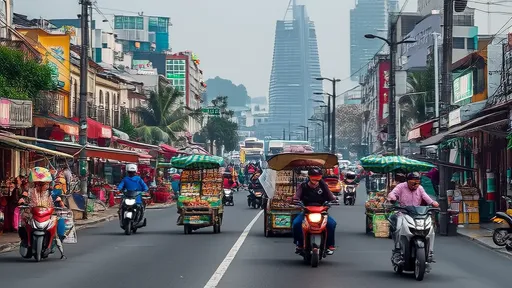
Nestled amidst the tropical allure of Bali, Denpasar stands as a stark and vibrant contrast to the island's famed beaches and resort life. This is not a city of mere transit or casual tourism; it is the authentic, beating heart of Balinese culture, a sprawling, chaotic, and utterly captivating urban center where ancient traditions are not preserved behind glass but are lived, breathed, and constantly reinvented on the bustling streets. To understand Bali beyond the postcard imagery, one must venture into Denpasar's labyrinthine alleys, where the scent of frangipani and incense mingles with the exhaust of a thousand motorbikes, and where the rhythmic cadence of gamelan music provides the soundtrack to daily life.
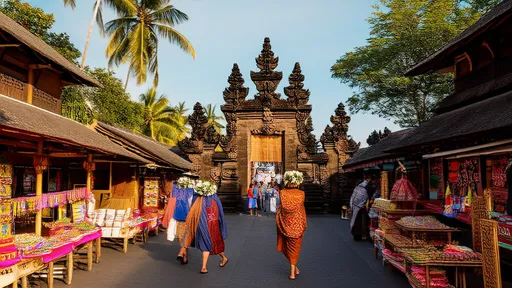
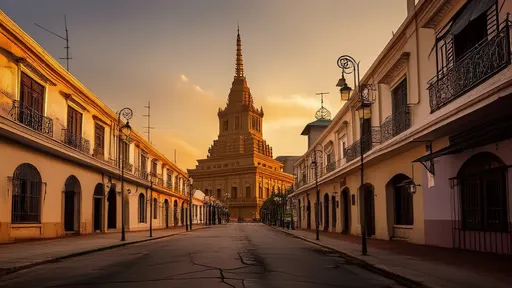
The city's role as the island's cultural core is immediately apparent at its spiritual and geographical center, the Pura Agung Jagatnatha, the state temple. Unlike the temples tucked away in villages or perched on clifftops, this one is a hub of constant activity, a place where civil servants on lunch breaks offer prayers alongside devoted pilgrims. Dedicated to Sang Hyang Widhi Wasa, the supreme god, its towering padmasana (shrine) is a masterpiece of white coral stone. Here, one witnesses the profound and seamless integration of faith into the modern urban fabric. The temple is not a relic; it is a living, breathing institution, and its presence in the heart of the administrative capital underscores a fundamental Balinese truth: that spirituality and governance, the sacred and the secular, are inextricably linked.
This deep-seated spirituality is the very bedrock from which Denpasar's unparalleled artistic expressions have flourished for centuries. The city is the undisputed guardian of classical Balinese arts. A short journey to the eastern outskirts brings you to the village of Kesiman, renowned for its mastery of the ancient and sacred Kamasan painting style. This visual language, derived from the wayang (shadow puppet) tradition, depicts stories from the Hindu epics, the Ramayana and Mahabharata, on natural canvases. The pigments are organic, derived from stones and soils, and the narratives are laid out in panels, much like a comic strip, following strict iconographic rules passed down through generations. In small, open workshops, artists can be seen meticulously applying these age-old techniques, their work a direct lineage to the court artists of the Balinese kingdoms.
Similarly, the art of traditional dance and music is not a performance for tourists here but a vital aspect of cultural and religious identity. The city's many banjars (community wards) serve as the training grounds for this living heritage. As dusk falls, the sound of gamelan orchestras rehearsing echoes from community halls. Young girls, their faces already expressing a depth of emotion beyond their years, practice the precise finger movements and hypnotic eye flicks of the Legong dance. Boys learn the powerful, masculine rhythms of the Baris war dance. This is where art is forged in community, a mandatory skill for temple ceremonies and religious festivals, ensuring that these complex art forms do not fade into obscurity but remain vibrant and essential.
Yet, Denpasar is far from being a city trapped in the past. It is a dynamic crucible where tradition engages in a thrilling and constant dialogue with contemporary innovation. This is most vividly showcased at the Bali Art Festival, held annually at the Taman Werdhi Budaya Arts Center from June to July. For over a month, the entire arts center transforms into a massive, open-air stage and gallery. It is a spectacular gathering where artists from the island's most remote villages bring their pure, traditional offerings, while Denpasar's own avant-garde painters, sculptors, dancers, and performers present bold, new interpretations of their heritage. One might see a classical Topeng (mask) dance performed with a new choreographic narrative, or paintings that infuse the Kamasan style with surrealist or social-commentary themes. The festival is a powerful statement: Balinese culture is not static. It is a living, evolving entity, and Denpasar is the laboratory where its future is being shaped.
This modern artistic pulse is further felt in the city's burgeoning commercial art scene. Galleries and collective studios are scattered throughout its neighborhoods, particularly in areas like Renon. Here, a new generation of artists, many graduates from the nearby Indonesian Arts Institute (ISI Denpasar), challenge conventions. They work with modern mediums—acrylics, installation art, digital media—while their subject matter remains deeply rooted in Balinese mythology, social issues, and spiritual inquiries. They deconstruct the stories of Rangda and Barong, comment on environmental degradation, or explore the complexities of modern identity in a globalized world. Their work is a testament to the city's role not just as a preserver, but as a critical and innovative force in the art world.
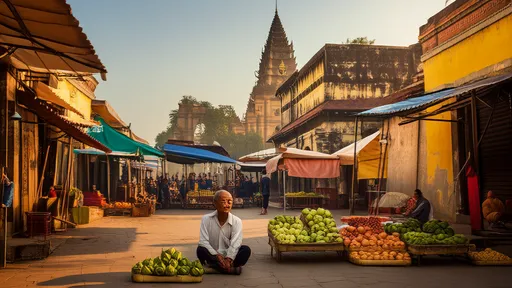
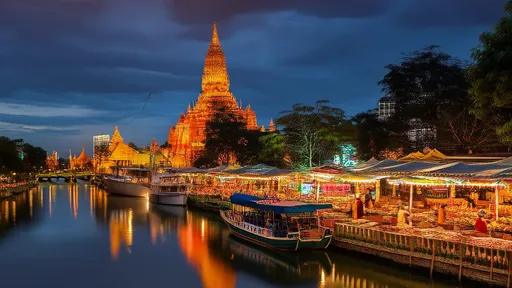
To experience the raw, unfiltered energy of Denpasar's cultural life, one must dive into its markets. The Pasar Badung and the adjacent Pasar Kumbasari are not merely places of commerce; they are chaotic, multi-story theaters of daily life. Pasar Badung, the main produce market, is a sensory overload of vibrant colors and potent smells—towering piles of exotic fruits, fragrant spices, intricate baskets of canang sari (daily offerings), and freshly butchered meat. Across the river, Pasar Kumbasari caters to more material and artistic needs. Its floors are a treasure trove of textiles, from mass-produced sarongs to exquisite, hand-woven endek and songket fabrics. Artisans' stalls are filled with beautifully carved wooden statues, ceremonial kris daggers, and silver jewelry. Navigating these markets is to witness the raw materials of Balinese culture—both literal and metaphorical—being traded, valued, and woven into the everyday.
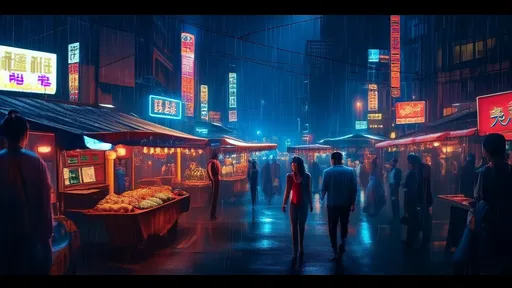
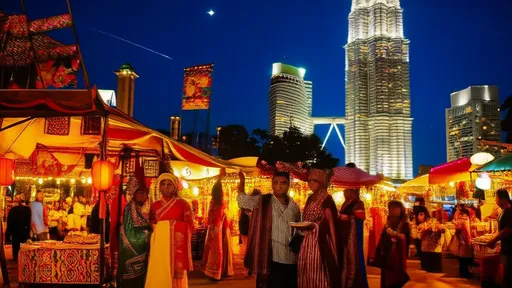
The city's culinary landscape offers another delicious layer to its cultural identity. Denpasar is the best place on the island to experience authentic Balinese cuisine, far removed from the toned-down, tourist-friendly versions found in resort areas. Warungs (small local eateries) and night markets serve up bold, complex, and often fiery dishes that are the true taste of the island. Savor Babi Guling (suckling pig), a masterpiece of spit-roasted pork with crispy skin, infused with a deep marinade of turmeric, garlic, and chilies. Try Bebek Betutu, duck slow-cooked for up to 24 hours in a rich paste of shallots, garlic, and a myriad of spices, wrapped in banana leaves. Each dish is a testament to the Balinese mastery of spice and ritual, a cuisine deeply connected to ceremonial feasts and community gatherings.
Ultimately, Denpasar’s true essence lies in its beautiful, chaotic paradox. It is a city of honking horns and quiet temple prayers; of ancient stone carvers and modern graphic designers; of pungent market smells and the delicate fragrance of temple offerings. It refuses to be easily categorized. It is not a "pretty" city in the conventional sense, but its beauty is profound, revealed in its authenticity and its unwavering commitment to its cultural soul. It is the engine room of Bali, the place where art is not made for display but for life itself. For the traveler seeking to move beyond the sunbed and truly connect with the spirit of Bali, a journey into the vibrant, unyielding heart of Denpasar is not just recommended—it is essential. This is where the island's past, present, and exciting future converge in a magnificent, unforgettable symphony.
By /Sep 3, 2025
By /Sep 3, 2025
By /Sep 3, 2025
By /Sep 3, 2025
By /Sep 3, 2025
By /Sep 3, 2025
By /Sep 3, 2025
By /Sep 3, 2025
By /Sep 3, 2025
By /Sep 3, 2025
By /Sep 3, 2025

By /Sep 3, 2025

By /Sep 3, 2025

By /Sep 3, 2025

By /Sep 3, 2025

By /Sep 3, 2025

By /Sep 3, 2025

By /Sep 3, 2025

By /Sep 3, 2025
By /Sep 3, 2025
