Nestled within the heart of Borneo, the Ulu Temburong National Park in Brunei stands as a pristine testament to nature's grandeur. This protected expanse of lush rainforest, often referred to as the "Green Jewel of Brunei," offers an unparalleled glimpse into one of the world's oldest and most biodiverse ecosystems. For the intrepid traveler and the devoted naturalist alike, it presents a rare opportunity to disconnect from the modern world and immerse oneself in an environment that has thrived for millions of years. The air is thick with the symphony of life—the distant calls of exotic birds, the rustle of leaves from unseen creatures, and the constant, gentle hum of the jungle.
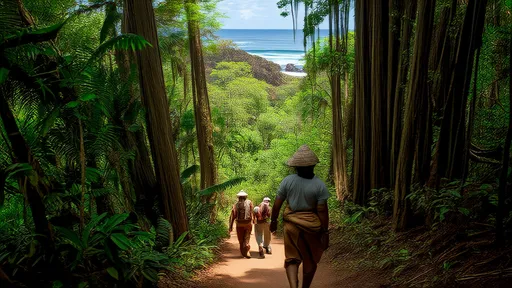
One of the park's most extraordinary features is its magnificent canopy walkway. This engineering marvel, a series of sturdy aluminum towers connected by suspended bridges, ascends high above the forest floor, offering visitors a perspective few ever get to witness. The journey to the walkway itself is an adventure, often involving a traditional longboat ride along the swift-flowing Temburong River, followed by a trek through the dense, vibrant undergrowth. Reaching the first platform is a moment of pure awe. As you step onto the gently swaying bridge, you are suddenly transported into a different world—the world of the treetops, a realm teeming with life that is entirely separate from the forest below.
The view from the canopy is nothing short of breathtaking. A seemingly endless sea of emerald green stretches out in every direction, broken only by the occasional emergent tree towering even higher. From this vantage point, you gain a true appreciation for the complexity and scale of the rainforest. Epiphytes and lianas drape from branches, orchids bloom in hidden crevices, and sunlight filters through the layers of leaves in shimmering beams. It is here, amidst this aerial landscape, that one of Borneo's most iconic and peculiar residents makes its home: the remarkable proboscis monkey.
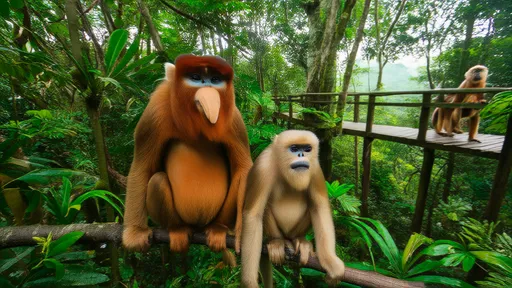
The proboscis monkey, with its unmistakable and comically large nose, is a creature that seems almost too bizarre to be real. Endemic to the island of Borneo, these monkeys are a highlight for any visitor to Ulu Temburong. Observing them from the canopy walkway is a privileged experience. They are highly arboreal, spending the majority of their lives high in the trees, making the canopy the perfect stage from which to watch their daily dramas unfold. Troops can be seen leaping with incredible agility between branches, their reddish-brown fur stark against the green foliage. The males, with their pendulous noses that can droop down over their mouths, are particularly charismatic figures.
Their social structure is complex and fascinating to observe. A typical troop consists of a single dominant male, a harem of several females, and their offspring. The alpha male is not only the largest but also possesses the most prominent nose, which is believed to amplify his loud, honking calls. These vocalizations serve to assert his dominance, warn the group of danger, and communicate with rival males. From the quiet platform of the canopy walk, you might be lucky enough to hear this distinctive call echo through the trees, a sound that is as unique to the Bornean rainforest as the monkey itself.
Beyond their entertaining appearance, proboscis monkeys play a vital role in the health of the mangrove and riverine ecosystems they inhabit. They are primarily folivores, meaning their diet consists mainly of leaves, but they also consume unripe fruits and seeds. This particular diet, rich in difficult-to-digest cellulose, results in a unique digestive system similar to that of a cow, which involves bacterial fermentation. This process can often leave them looking rather pot-bellied. Their selective feeding habits help to regulate plant growth and disperse seeds, contributing to the forest's regeneration and overall biodiversity.
The experience of witnessing these animals in their natural habitat, from a platform that feels like a part of the forest itself, is profoundly moving. It creates a tangible connection to the wild, a reminder of the intricate web of life that exists beyond our urban centers. The canopy walk does not intrude upon the jungle; instead, it invites you in as a quiet observer. There are no loud engines or disruptive noises—just the creak of the bridge and the wind in the leaves. This respectful approach to eco-tourism is a hallmark of the park's philosophy, ensuring that human presence has minimal impact on the delicate environment.
However, the existence of such unique wildlife is perpetually under threat. Deforestation, habitat fragmentation, and palm oil plantations pose significant dangers to the proboscis monkey population, which is currently classified as Endangered. The protected sanctuary of Ulu Temburong National Park is therefore more crucial than ever. It serves as a vital refuge, a stronghold where these animals can live and thrive without the immediate pressures of habitat loss. Visiting the park and participating in responsible tourism directly contributes to its conservation efforts, providing the necessary funds and raising global awareness about the importance of preserving such irreplaceable ecosystems.
A day spent exploring the canopy and searching for proboscis monkeys is more than just a tourist activity; it is an education. It is a lesson in ecology, resilience, and the sheer wonder of evolution. It underscores the fact that we are mere guests in this ancient world, and with that privilege comes a great responsibility. As you descend from the towers and make your way back down the river, the images stay with you—the vast green panorama, the graceful arc of a monkey leaping through the air, and the profound peace of the rainforest canopy. It is an experience that changes you, fostering a deeper appreciation for our planet's wild places and the incredible creatures that inhabit them.
Ulu Temburong National Park is not just a destination; it is a beacon of conservation hope. It stands as proof that when we choose to protect and cherish our natural world, we preserve not only species like the proboscis monkey but also the magic and mystery that make our planet so extraordinary. The memory of looking into the eyes of a wild monkey from a walkway in the sky is a powerful catalyst for change, inspiring a lifelong commitment to safeguarding these precious environments for generations to come.

By /Sep 3, 2025
By /Sep 3, 2025

By /Sep 3, 2025

By /Sep 3, 2025

By /Sep 3, 2025

By /Sep 3, 2025

By /Sep 3, 2025

By /Sep 3, 2025

By /Sep 3, 2025

By /Sep 3, 2025
By /Sep 3, 2025

By /Sep 3, 2025
By /Sep 3, 2025

By /Sep 3, 2025

By /Sep 3, 2025

By /Sep 3, 2025

By /Sep 3, 2025
By /Sep 3, 2025
By /Sep 3, 2025
By /Sep 3, 2025
