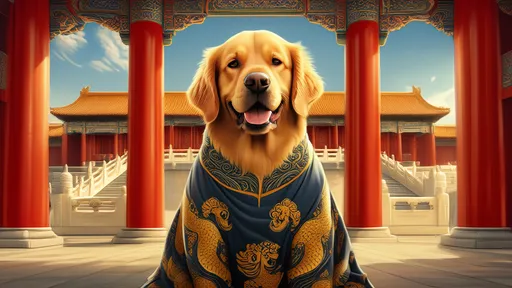
The Forbidden City’s silent courtyards and vermilion walls have witnessed centuries of imperial drama, but perhaps none of its former residents have captured the world’s imagination quite like a small, lion-like dog with a flat face and a profound attitude—the Pekingese. This is not merely the story of a breed; it is a saga of divinity, imperial privilege, survival, and global conquest, all contained within a package seldom weighing over fourteen pounds.
To understand the Pekingese is to travel back to ancient China, where they were not merely pets but living symbols of the mythical lion, a sacred creature in Buddhism. Buddhist lore tells of a lion that shrunk itself down out of devotion to follow the Buddha, and this "lion dog" was its earthly manifestation. For centuries, they were the exclusive property of the Chinese imperial family, revered as protectors against evil spirits. So sacred were they that they had their own miniature palaces and were attended to by eunuchs. Stealing one was a crime punishable by death. They lived in a rarefied world of silk cushions and exquisite spoiling, their every whim catered to, their every snore heard in the halls of power.
Their world, and that of the Qing Dynasty, came crashing down in 1860 during the Second Opium War. As British and French forces stormed the Summer Palace, the Emperor Xianfeng fled. In the ensuing chaos, the imperial kennels were discovered. The story, perhaps apocryphal but powerful, tells of an English officer finding five small dogs guarding the body of their mistress, an imperial aunt who had taken her own life rather than be captured. These five dogs were brought back to England, presented to Queen Victoria, and thus began the Pekingese's journey from the heart of a forbidden empire to the drawing rooms of European aristocracy.
The arrival of this "Looty," as one was named, in the West caused a sensation. Victorian England was in the throes of a fascination with all things exotic and Oriental. Here was a living, breathing artifact from a mysterious and closed civilization. The breed’s dramatic appearance—the abundant mane, the rolling gait, the expression of haughty disdain—perfectly fit the Victorian aesthetic. They were immediately seen as a status symbol, a luxury item that spoke of empire, refinement, and global reach. The first Pekingese to be shown in the West caused a near-riot of interest, and soon, dedicated breeding programs were established to preserve and propagate this newfound treasure.
Their journey to America followed a similar path of elite adoption. They quickly became favorites of high society figures and Hollywood starlets, their dramatic looks and big personalities making them perfect companions for the rich and famous. The American Kennel Club recognized the breed in 1906, cementing its place in the New World. Yet, this global spread came at a cost. The original imperial bloodlines were diluted, and Western breeders, pursuing specific aesthetic ideals, often accentuated features like the extremely flat face and profuse coat, sometimes at the expense of the breed's original hardiness.
The modern Pekingese is a testament to its incredible history. It carries the legacy of the Forbidden City in its very DNA. This is a dog that knows its own worth. It is not a fawning sycophant but a dignified companion, offering its affection on its own terms. The famous "Peke attitude" is a blend of courage, stubbornness, and a deep, almost unsettling serenity. They are clowns and emperors in equal measure, capable of great silliness one moment and profound stillness the next.
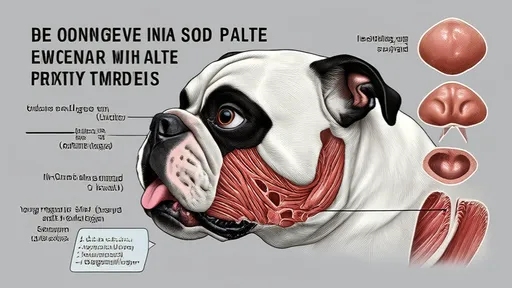
However, guardianship of this living artifact comes with great responsibility. Their unique anatomy, particularly their brachycephalic (flat-faced) structure, requires vigilant care. Responsible breeding practices that prioritize health and breathing function over extreme conformation are crucial for the breed's future. Owners must be attuned to their needs, protecting them from heat and ensuring they live a life as comfortable as their imperial ancestors, albeit perhaps with fewer eunuch attendants.
From the silent, sacred halls of the Forbidden City to parks and homes across the globe, the Pekingese has completed an astonishing journey. It is a dog that has been worshipped as a god, looted as treasure, coveted as a symbol, and cherished as a friend. It embodies a slice of Chinese history that refused to fade away. The Pekingese is more than a pet; it is a resilient, four-legged piece of living art, a permanent reminder of empire, elegance, and the enduring power of a very big personality in a very small body.

By /Aug 20, 2025

By /Aug 20, 2025

By /Aug 20, 2025

By /Aug 20, 2025

By /Aug 20, 2025
By /Aug 20, 2025

By /Aug 20, 2025

By /Aug 20, 2025
By /Aug 20, 2025
By /Aug 20, 2025
By /Aug 20, 2025
By /Aug 20, 2025

By /Aug 20, 2025
By /Aug 20, 2025
By /Aug 20, 2025

By /Aug 20, 2025

By /Aug 20, 2025

By /Aug 20, 2025
By /Aug 20, 2025
By /Aug 20, 2025
