Brachycephalic airway syndrome represents one of the most significant and unfortunately common health challenges faced by bulldog breeds today. This complex condition, stemming directly from the very physical traits that make these dogs so visually distinctive, involves a constellation of anatomical abnormalities that collectively obstruct normal breathing. For owners and breeders, understanding this syndrome is not merely an academic exercise; it is fundamental to ensuring the welfare and quality of life of these beloved companions. The shortened skull and pushed-in face, while breed-defining, come at a steep physiological cost, creating a lifelong struggle for air that defines the daily existence of many affected dogs.
The anatomy of a brachycephalic dog is a textbook example of form negatively impacting function. The term itself, derived from Greek words meaning "short" and "head," only tells part of the story. The selective breeding for an extremely shortened muzzle has resulted in a skeleton that no longer proportionally accommodates the soft tissues within. Essentially, the same amount of tissue—the soft palate, the tongue, the nasal turbinates—is crammed into a significantly smaller space. This fundamental mismatch is the root cause of the entire syndrome. It creates a narrow, convoluted, and resistant pathway for air to travel from the nose to the lungs, turning every breath into a labored effort.
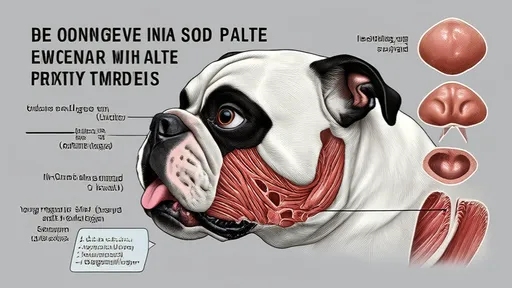
This syndrome is not a single disorder but rather a combination of several primary and secondary conditions that often occur together. The most common primary component is an elongated soft palate. This is the fleshy extension at the back of the roof of the mouth that separates the nasal passage from the oral cavity. In a healthy dog, it is just long enough to touch the tip of the epiglottis during swallowing, preventing food from entering the airways. In bulldogs, this palate is often excessively long, hanging down into the airway and physically blocking the entrance to the windpipe (trachea). This floppy tissue vibrates noisily during inspiration, creating the characteristic snorting and snoring sounds, but its impact is far more sinister than mere noise pollution; it is a major physical barrier to airflow.
Another primary defect is stenotic nares. This is the technical term for abnormally narrow or collapsed nostrils. In a typical dog, the nostrils flare open widely to allow maximal air intake. In many bulldogs, the nostrils are merely tiny, slit-like openings that collapse inward when the dog inhales, further increasing the effort required to draw air into the already compromised nasal passages. It is the equivalent of trying to run a marathon while breathing only through a thin straw. This defect is often the most visually obvious sign of the syndrome to an observant owner.
As the dog struggles for years to overcome these primary obstructions, the chronic increase in negative pressure inside the airway leads to the development of secondary conditions. The most significant of these is everted laryngeal saccules. These are small, pouch-like structures of tissue that normally sit just in front of the vocal cords. The immense suction force generated by the dog trying to pull air past its elongated soft palate and stenotic nares can literally suck these delicate saccules out of their normal position, turning them inside out (everting them). These everted saccules then protrude into the laryngeal opening, acting as additional obstacles in an already crowded and narrow passageway, dramatically worsening the obstruction in a vicious cycle.
In the most severe and advanced cases, the ongoing trauma and stress can even lead to laryngeal collapse. This represents the final, devastating stage of the disease process. The cartilaginous structures that form the framework of the larynx (voice box), which are normally rigid and hold the airway open, become weakened and flaccid from years of excessive strain. They begin to collapse inwards, effectively closing down the main airway to the lungs. Laryngeal collapse is a life-threatening emergency and carries a much more guarded prognosis, even with surgical intervention. It is a stark reminder that this syndrome is progressive; it actively gets worse over time without appropriate management and treatment.
The clinical signs of this syndrome are a direct reflection of the dog's desperate struggle to oxygenate its body. The most recognizable symptom is noisy breathing—a constant symphony of snorting, snoring, gagging, and stridor (a high-pitched wheezing sound) that is most pronounced during inhalation. Exercise intolerance is profound; these dogs may pant excessively and collapse after only a minute or two of playful activity. They often exhibit difficulty swallowing, frequently gagging or regurgitating food or foam. Many owners report that their dogs sleep with a toy in their mouth, a behavior believed to be a attempt to pull the overly long soft palate forward to open the airway. In severe episodes, often triggered by excitement, heat, or exercise, dogs can experience fainting spells (syncope) or even develop a bluish tinge to their gums (cyanosis) due to a critical lack of oxygen.
Perhaps the most dangerous aspect of this condition is its profound impact on the dog's ability to thermoregulate. Dogs primarily cool themselves by panting, which relies on the evaporation of water from the tongue and respiratory tract. A brachycephalic dog's panting is wildly inefficient. Their compromised airway cannot move enough air for effective evaporation, and their often-large tongue does not have enough surface area exposed for sufficient cooling. This makes them exquisitely sensitive to heat and humidity. A temperature that is merely uncomfortable for another breed can be rapidly fatal to a bulldog, leading to heatstroke with terrifying speed. This hyperthermia risk is a critical consideration for every owner, dictating the timing of walks, the need for air conditioning, and constant vigilance during warmer months.
Diagnosing brachycephalic airway syndrome requires a thorough veterinary examination. Stenotic nares can be diagnosed with a simple visual inspection. Assessing the soft palate, laryngeal saccules, and the integrity of the larynx itself requires a more involved procedure: a laryngeal exam under a light sedative. This allows the veterinarian to directly visualize the airway while the dog is relaxed but still breathing spontaneously, providing a definitive diagnosis of the specific components at play. This examination is crucial for planning any surgical intervention.
Management of this condition is a two-pronged approach: lifestyle modification and medical or surgical intervention. For all dogs, regardless of severity, strict weight management is non-negotiable. Excess fat, particularly in the neck and chest, further compresses the airway and adds to the respiratory burden. Avoiding situations that trigger excitement or stress, using a harness instead of a collar to avoid pressure on the trachea, and providing a cool, climate-controlled environment are essential daily practices. For dogs with mild signs, this conservative management may be sufficient for some time.
However, for the vast majority of bulldogs, surgery is not just an option; it is a necessary intervention to improve quality of life and halt the progression of the disease. The goal of surgery is to correct the anatomical defects causing the obstruction. This typically involves a dual procedure: a rhinoplasty to surgically widen the stenotic nares by removing a wedge of tissue from each nostril, and a staphylectomy (also known as a palatoplasty) to resect the excessive length of the soft palate. These procedures are most effective when performed proactively on young dogs, before secondary changes like everted saccules have had time to develop. If everted saccules are present, they are often removed at the same time. These surgeries are not a cure—the airway will never be "normal"—but they dramatically reduce the resistance to airflow, making breathing significantly easier and preventing the condition from worsening into laryngeal collapse.
The ethical considerations surrounding brachycephalic breeds like the bulldog are immense and growing within the veterinary and animal welfare communities. There is an increasing debate about whether breeding for such extreme conformation, knowing the inherent health problems it causes, is justifiable. The very features that win shows in the conformation ring are directly linked to this debilitating syndrome. Responsible breeding practices are moving towards selecting for dogs with longer muzzles, wider nostrils, and less excessive skin folds—a movement often referred to as "breeding for health." Prospective owners have a responsibility to seek out breeders who prioritize health over extreme appearance, to demand health testing of breeding stock, and to be fully prepared for the significant financial and emotional commitment these dogs require.
Living with a bulldog affected by brachycephalic airway syndrome is a journey that requires immense dedication, vigilance, and resources. It means constantly monitoring their breathing, managing their environment, and understanding their limitations. It often involves significant veterinary expenses, especially if corrective surgery is needed. Yet, for all their challenges, these dogs possess a legendary temperament—affectionate, courageous, and deeply loyal. The goal for veterinarians, breeders, and owners must be a unified one: to advocate for their health, to manage their condition proactively, and to ensure that every bulldog has the chance to live a life where breathing is not a struggle, but a simple, effortless pleasure. Their future well-being depends on a collective shift in perspective, from valuing an exaggerated standard to championing a healthy, functional dog.
By /Aug 20, 2025
By /Aug 20, 2025
By /Aug 20, 2025

By /Aug 20, 2025
By /Aug 20, 2025
By /Aug 20, 2025
By /Aug 20, 2025
By /Aug 20, 2025
By /Aug 20, 2025
By /Aug 20, 2025

By /Aug 20, 2025

By /Aug 20, 2025

By /Aug 20, 2025

By /Aug 20, 2025

By /Aug 20, 2025

By /Aug 20, 2025

By /Aug 20, 2025

By /Aug 20, 2025

By /Aug 20, 2025

By /Aug 20, 2025
